
Architecture
Deciding on a metrics layer without a year-long pilot
The metrics layer question is smaller than vendors make it. A two-meeting decision process based on where your numbers already disagree.
The Cloud Practice3 min readArchitecture
The metrics layer pitch is grand: every number defined once, every tool served the same truth. The failure stories are equally grand. In assessments we shrink the question to something two meetings can answer, because the deciding evidence is already inside the building.
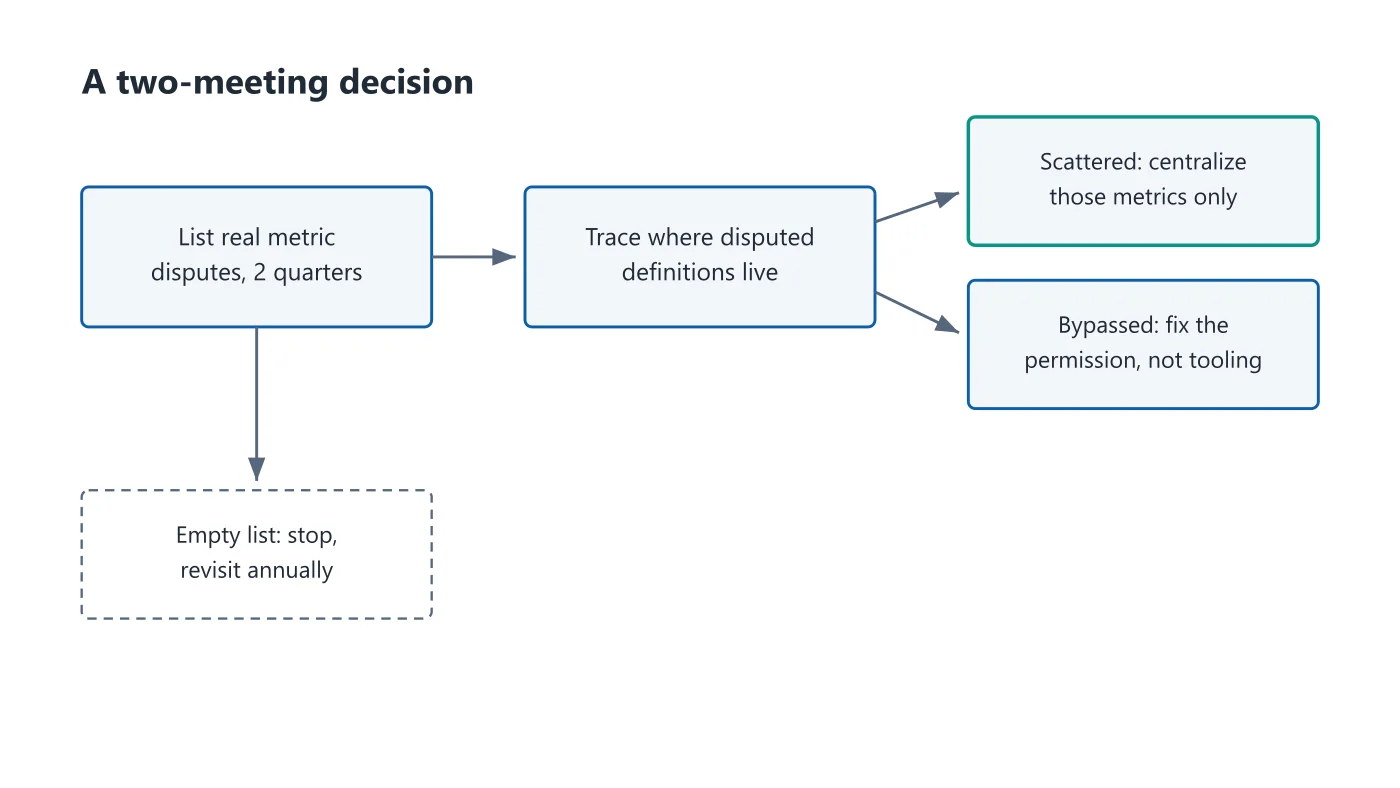
Meeting one: collect the disputes. List the metrics that produced a cross-team disagreement in the last two quarters. Not hypothetical drift; actual meetings where two numbers claiming the same name collided. If the list is empty or short, stop. You do not have a metrics layer problem; you have a vendor category looking for one. Revisit annually.
Meeting two: trace the disputed few. For each disputed metric, find where its definitions live: which tools, whose SQL, which calculated fields. The pattern decides the architecture. Definitions scattered across BI-tool formulas point to centralizing those specific metrics in the transformation or semantic layer, wired into only the tools where the disputes happened. Definitions already centralized but bypassed point to an adoption problem no additional tooling fixes; someone is allowed to bypass the governed number, and that permission is the bug.
what centralizing actually involves
For the disputed few, the work is smaller than the category's reputation. Each metric gets one governed definition in the transformation layer, expressed in the same SQL dialect the team already writes, with the business logic annotated: which orders count, which time zone closes the day, what happens to refunds. The tools where the disputes occurred get pointed at the governed definition, and the old calculated fields are deleted rather than deprecated, because a deprecated definition is a dispute on a delay timer. Expect the work to be measured in weeks for a handful of metrics, and expect most of those weeks to be conversations about what the number should mean, which is the work the tooling was never going to do.
One rule keeps the whole arrangement stable: a governed metric changes through review, with the consumers notified before the change lands, not after the Monday meeting notices. The review is usually one approver and a one-day turnaround. It is not bureaucracy; it is the reason the number stays worth serving.
the posture that survives
Narrow and boring: govern the five to fifteen numbers that appear in executive or regulatory reporting, serve them through whatever layer your stack already includes, and let everything else remain honest ungoverned analysis. Analysts exploring freely is not a governance failure; two versions of reported revenue is. The expensive mistake is buying the maximal platform to solve the narrow problem, then spending a year discovering which of your metrics nobody agreed on in the first place, a discovery available today for the cost of two meetings.
A note on the AI pressure, since it now appears in most vendor decks: assistants answering metric questions do raise the stakes on governed definitions, and the narrow posture covers that too. An assistant grounded in fifteen governed executive metrics answers the questions executives ask; an assistant awaiting a two-hundred-metric rollout answers nothing for a year. The AI argument changes the urgency of the same small list. It does not change the list.
If both meetings point at a real problem and the narrow rollout begins, set the success measure on day one: disputed metrics that reach an executive, counted per quarter, trending to zero. Not definitions written, not tools integrated, not coverage percentages. The layer exists to end arguments; count the arguments.