
Migrations
Cutover patterns that don't bet the quarter
Big-bang cutovers make good war stories because they make bad migrations. The three patterns we use and how to pick between them.
The Cloud Practice2 min readMigrations
Every migration eventually reaches the moment where the new platform must become the real one. The pattern you choose for that moment decides whether a bad surprise costs an afternoon or a quarter. We use three, in descending order of preference.
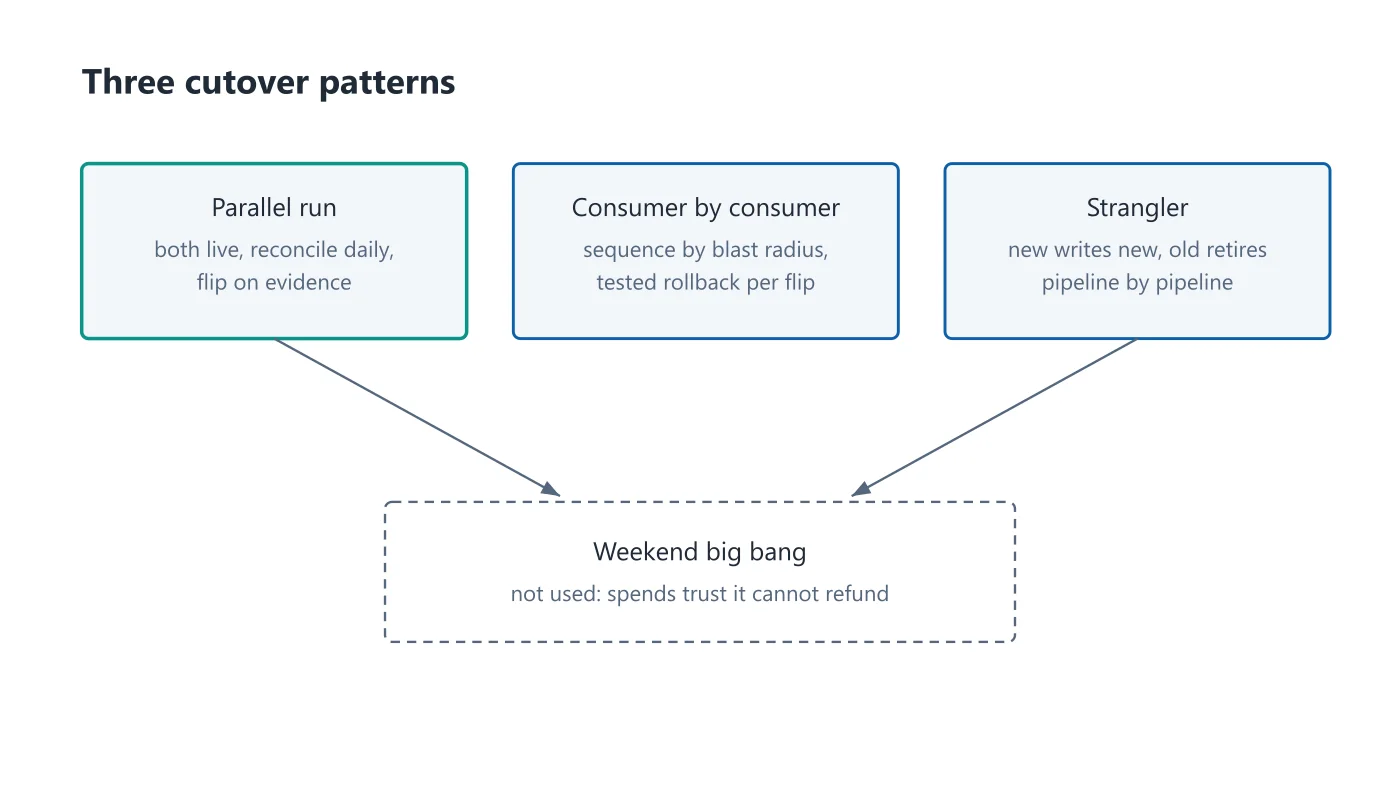
Parallel run with reconciliation. Both platforms live, consumers still read the old one, automated jobs compare outputs daily. Cutover happens per consumer once its numbers have matched for an agreed window. Slowest pattern, highest cost (two platforms billing), and the only one that converts risk into evidence before anyone depends on the new system. This is the default in our migration checklist for anything feeding money or regulators.
Consumer-by-consumer flip. Where full parallel running is too expensive, sequence consumers by blast radius: internal analytics first, executive reporting later, regulatory outputs last. Each flip is small enough to reverse. The discipline that makes it work is a rollback path tested before the flip, not after; an untested rollback is a rumor.
Strangler for the pipeline layer. New pipelines write to the new platform from day one; old pipelines retire one at a time as their consumers move. Avoids a migration project by making migration the operating mode. Works well when the estate is large and morale matters; the risk is a long tail of stragglers, which the decommission list must hunt to zero.
Whichever pattern fits, publish the cutover calendar to consumers in their own terms: which report moves when, what might look different, who to call in the first week. Most migration distrust is not caused by wrong numbers; it is caused by right numbers that changed shape without warning, a total that now includes refunds, a timezone normalized quietly. A one-page "what changes for you" note per consumer group costs an afternoon per cutover slice and buys the benefit of the doubt that the first genuine discrepancy will need.
What we do not use: the weekend big bang, in which everything flips at once and Monday becomes a discovery process. It has one advantage (a clean story for the steering committee) and it spends the one resource migrations cannot refund: stakeholder trust after the first wrong number.