
Governance
A data strategy that fits on one page
If the strategy needs forty slides, it is a wish list. The five sections that make a data strategy executable, with the questions each must answer.
The Cloud Practice2 min readGovernance
We read a lot of data strategies in assessments. The forty-slide ones share a property: nobody in the building can say what the team will do differently on Monday. The useful ones fit on a page, because a page forces choices. Five sections, each answering one question.
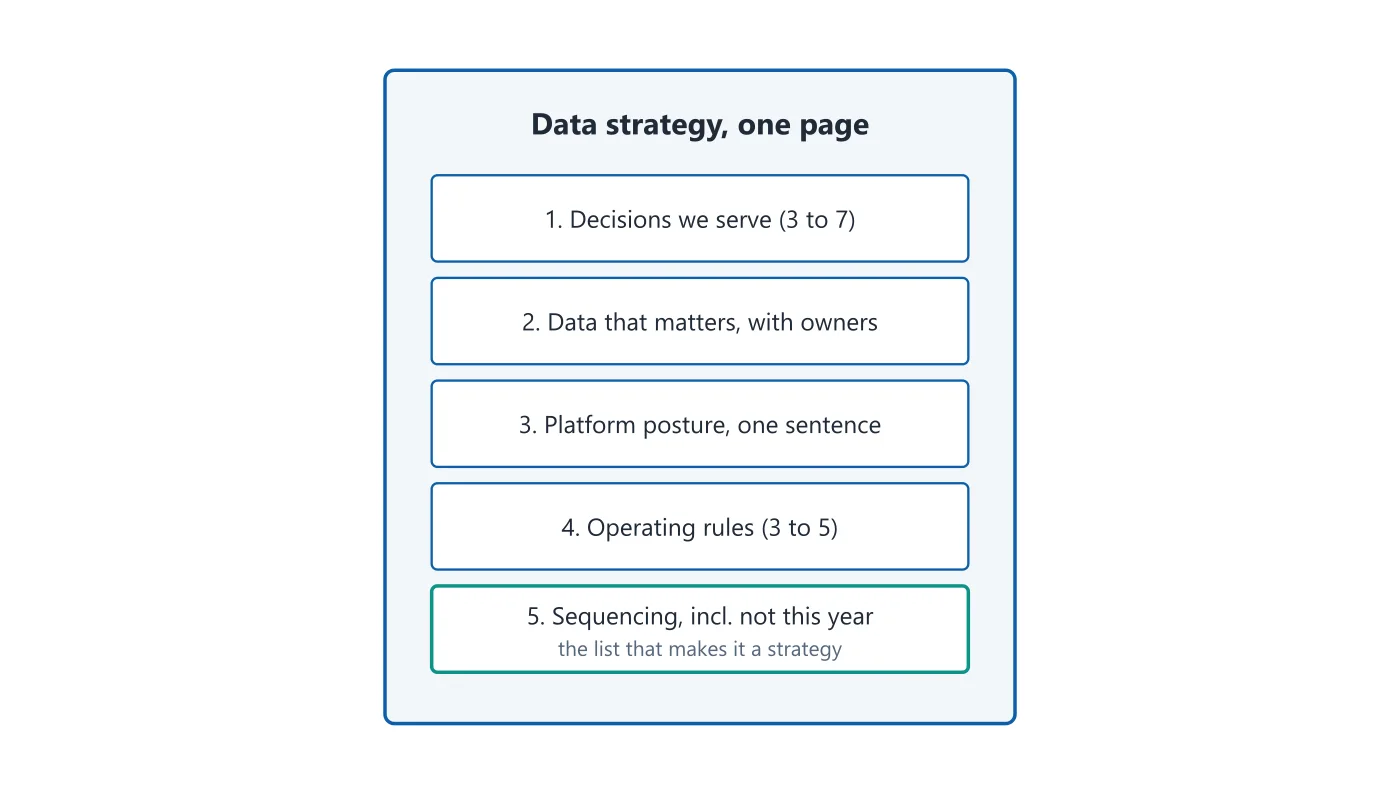
Decisions we serve. Not "become data-driven". Name the recurring business decisions the platform exists to improve: weekly pricing, credit approval, inventory buys. Everything else on the page must trace to one of these, or it gets cut. Three to seven is the honest range.
Data that matters. The domains those decisions consume, each with a named owner and a quality bar stated plainly: how fresh, how complete, verified by what check. Where three systems disagree on which customer is which, this section also names the identity mapping that settles it.
Platform posture. One sentence of architecture: what you standardize on and what you refuse to build. "Managed warehouse, batch by default, no streaming without a named decision" is a posture. A vendor collage is not; the market survey belongs in the appendix, not the strategy.
Operating rules. The three to five non-negotiables: contracts at team boundaries, cost visible per workload, every dataset has an owner, nothing ships without its quality check.
Sequencing. What gets built this quarter, next quarter, and explicitly not this year. The "not this year" list is the strategy; everything above it is preamble.
The page also needs a maintenance clause, or it becomes a plaque. Ours is one sentence at the bottom: reviewed quarterly, owned by a named person, and any line that survives two reviews unchanged while reality diverged gets flagged in the review rather than quietly edited. Strategy documents do not fail by being wrong; they fail by being wrong silently while everyone works from memory of the old version. Dating the edits keeps the disagreements attached to the document, where they are useful.
One page means disagreements surface in review instead of in production. When a stakeholder objects to a line, that is the page working. When nobody objects, the page is still too vague, and we would say so in an assessment.